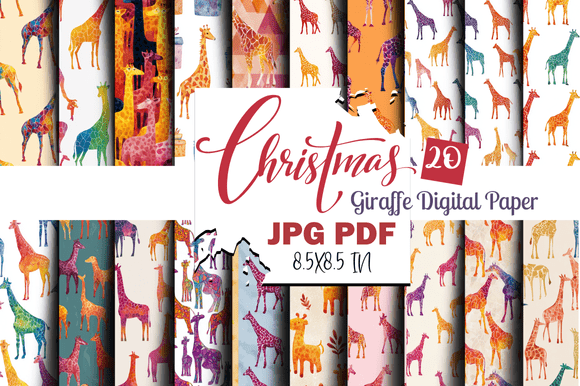
Christmas Giraffe Digital Paper
When I pull a new design file into my embroidery software, I am rarely looking at just a picture. I am looking at a production plan. I am visualizing the needle movement, the thread tension, and the final tactile experience of the finished product. This is why I approach the Christmas Giraffe Digital Paper with a critical eye. As an experienced designer who regularly creates assets for Etsy sellers, boutique brands, and personal clients, I know that holiday-themed designs can easily fall into the trap of being cluttered or overly complex. However, this particular piece offers a compelling balance of whimsy and structure that makes it a strong contender for serious craft business items.
First Impressions: Mood and Visual Personality
The immediate appeal of this machine embroidery design lies in its character. It does not feel like a generic clip-art reindeer wearing a hat; it feels like a curated illustration brought to life through thread. The giraffe motif naturally lends itself to a playful, high-end nursery aesthetic, but the Christmas theme anchors it firmly in seasonal gifting. When I first loaded the embroidery file, I was struck by how the layout handles negative space. There is enough breathing room around the subject that it will not get lost on larger garments, yet the details are sufficient to hold attention on smaller accessories.
This design fits perfectly into the Patterns category because it relies on clean lines and distinct shapes rather than photorealistic shading. This is crucial for machine work. The visual personality is warm, inviting, and slightly nostalgic. It screams "handmade" without looking amateurish. For creative entrepreneurs building a brand identity around cozy, festive vibes, this design provides a solid foundation. It creates a mood that is both cheerful and sophisticated, avoiding the chaotic energy of some busy holiday prints.
Real-World Application: From Screen to Stitch
To truly judge a design, you have to imagine it on fabric. Let’s look at a specific scenario: preparing a custom embroidered tote bag for a holiday market stall. A standard canvas tote is durable, but it can be stiff. If I were to place a dense, heavy design here, the handle might become uncomfortable. The Christmas Giraffe Digital Paper strikes a smart balance. Its stitch distribution appears optimized for medium-density areas, meaning it will lay flat without puckering the canvas.
I also envision this as a standout item for sweatshirt embroidery. Think of a soft, cream-colored fleece pullover with the giraffe centered on the chest or placed asymmetrically on the pocket area. The contrast between the textured fabric and the smooth threads would elevate the garment from basic merchandise to a premium personalized gift. Similarly, for apron decoration in a kitchen setting, this design adds a touch of humor and warmth that appeals to home cooks. It works beautifully as a holiday embroidery accent on tea towels, where the vertical orientation of the giraffe complements the long shape of the cloth.
For baby embroidery, the softness implied by the design’s aesthetic is key. On a onesie or a burp cloth, the gentle curves of the giraffe feel safe and soothing. It transitions well into nursery decor projects, such as pillow covers or wall hangings, where it serves as a focal point. The versatility here is impressive; it bridges the gap between cute baby gear and chic adult apparel, allowing small shop products to reach a wider demographic.
Where Caution Is Required
No design is universally perfect, and I must highlight areas where this digital embroidery file requires careful execution. First, consider the hoop size. While the design likely scales well, attempting to digitize or embroider it in a very small hoop may result in lost detail. Tiny features, such as the texture on the giraffe’s spots or the fine lines of a scarf, can merge together if the stitch density is too high for the available space.
Fabric choice is equally critical. Avoid using this on highly textured fabrics like heavy bouclé wool or thick terry cloth, as the stitches will struggle to penetrate evenly. Thin or stretchy knits require a proper stabilizer to prevent distortion; without it, the circular elements of the design may warp during stitching. Dark fabrics can also pose a challenge if the thread colors chosen do not offer sufficient contrast. I always recommend testing your thread colors against the actual fabric swatch before committing to a full run.
Additionally, be mindful of curved surfaces like embroidered patches for caps. If the design includes intricate corners or delicate lettering, these areas are prone to thread breaks or misalignment on rounded forms. For products that need frequent washing, ensure the design uses robust stitch types. While this design looks elegant, excessive satin stitch borders on high-friction areas like cap brims may fray over time.
Impact on Brand Value and Customer Trust
In the world of handmade commerce, presentation is everything. A well-executed design signals professionalism and builds buyer engagement. The Christmas Giraffe Digital Paper enhances brand consistency because of its clear, recognizable silhouette. Customers instantly understand the theme, which reduces cognitive load and increases the likelihood of a purchase.
When you create a printable mockup for your online store, this design photographs exceptionally well. It reads clearly even in thumbnail images, which is vital for Etsy listings where competition is fierce. The unique combination of a giraffe and Christmas imagery gives you a niche angle that stands out against the sea of traditional Santa or snowman designs. This uniqueness fosters customer trust because it suggests that you offer something special, not just another mass-produced template.
Practical Designer Notes for Execution
Before you start stitching, there are several technical steps every professional should take. First, test the design on scrap fabric that matches the weight and texture of your final material. This allows you to check for any unexpected shifting or tension issues. Review the stitch density in your software; if certain areas look too packed, consider adjusting the underlay or reducing the number of passes.
Inspect small details closely. Are the eyes distinct? Is the outline clean? If you are planning to use this for commercial embroidery, confirm the licensing terms explicitly. Many designers assume all files are commercial-ready, but this varies wildly. Ensure you have the right to sell finished items made from this design asset.
It is also wise to view your design in black and white mode within your software. This helps you evaluate the value contrast between different thread colors. If the design looks muddy in grayscale, it will likely look muddy in color. Use a proper stabilizer appropriate for your fabric type—cut-away for wovens, tear-away for stable knits—to ensure the longevity of the embroidery project.
Finally, compare light and dark fabric backgrounds side-by-side. Sometimes a design that looks vibrant on white thread loses its impact on navy blue unless you adjust the primary thread choice. By taking these precautions, you ensure that the Christmas Giraffe Digital Paper performs flawlessly, resulting in a custom apparel item or gift that delights your customers and reflects well on your craft business.